 1 / 2
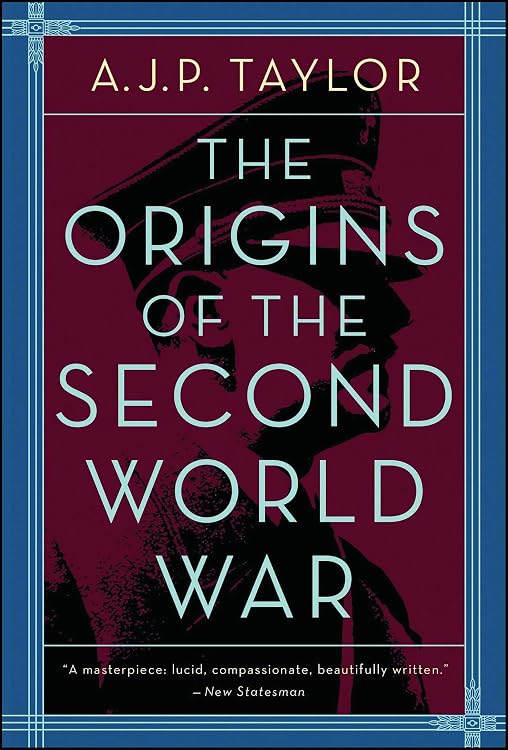
The Origins of the Second World War by A.J.P. Taylor
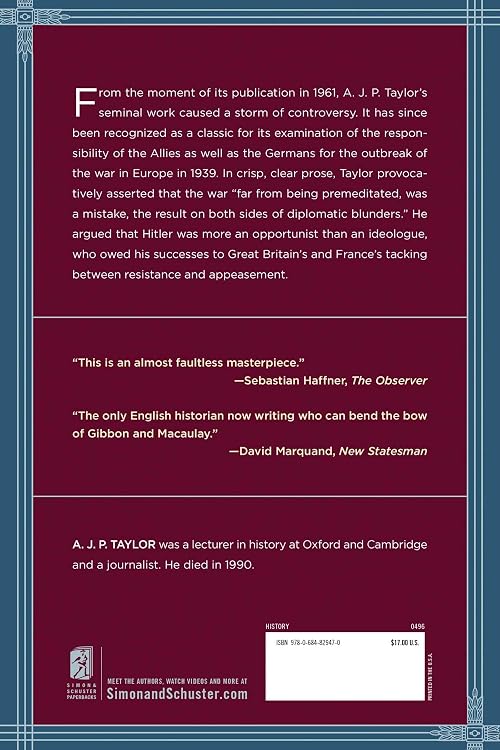
The Origins of the Second World War is A.J.P. Taylor’s examination of the diplomacy and foreign policy leading up to the conflict. Its account challenges the view that Hitler followed a detailed pre-planned path to war, making it a focused choice for readers interested in historical interpretation as well as events.
At a glance
- Historical argument about the origins of the Second World War, centred on diplomacy and foreign policy.
- The listing describes Taylor’s thesis as challenging the idea that Hitler had a detailed plan for war.
- Customer feedback highlights readable prose and detailed historical discussion.
Often bought together
Pros and cons
Pros
- A focused analysis of international politics and decisions leading up to the war.
- The listing identifies a specific, debated historical thesis rather than presenting the book as a general war chronology.
- Feedback describes the prose as readable while also noting its substantial detail.
Cons
- The book’s emphasis on diplomatic interpretation may not suit readers seeking a broad, event-by-event account of the entire war.
Technical specifications
8 specifications| Publisher | Simon & Schuster |
|---|---|
| Publication date | April 1 1996 |
| Language | English |
| Print length | 320 pages |
| ISBN-10 | 0684829479 |
| ISBN-13 | 978-0684829470 |
| Weight listed | 408 g |
|---|---|
| Dimensions | 13.97 x 2.54 x 20.96 cm |
What to know before buying
Listing details to confirm
The listing describes the text as published in 1961, while its product details give a publication date of April 1 1996. Confirm the edition details if the publication date or specific printing matters.
Who is it for?
A good fit for
- Readers interested in the diplomatic origins of the Second World War.
- Those comparing interpretations of Hitler’s intentions and pre-war foreign policy.
- History readers comfortable with detailed, argument-led non-fiction.
Less suited to
- Readers primarily looking for a concise overview or a narrative covering the full course of the war.
Customer reviews on Amazon
- 5 stars
69% 69% - 4 stars
20% 20% - 3 stars
9% 9% - 2 stars
1% 1% - 1 star
1% 1%
Customer feedback describes the book as compelling and informative, with praise for its flowing prose and rich detail. Some readers characterize the detail as textbook-like, so it may be a better fit for readers who want sustained historical argument than for those seeking a brief introduction. The aggregate ratings lean positive, but ratings alone cannot establish why readers judged it as they did.
Positive themes
- Customer feedback praises the historical content as insightful and informative.
- Readers describe the writing as readable and well written.
- Feedback appreciates the book’s detail.
Mixed feedback
- The detail is welcomed by some readers, while others describe the book as a detailed textbook.
Frequently asked questions
What is the book about?
The listing describes Taylor’s exploration of international politics and foreign policy leading up to the Second World War, including his argument about Hitler’s intentions.
Is this a general history of the entire war?
The supplied description focuses on the events and diplomacy leading to the outbreak of war, so it is better suited to readers seeking an analysis of its origins than a full war chronology.
What edition details are listed?
The product details list Simon & Schuster, a publication date of April 1 1996, and 320 pages. The description also says the work was published in 1961, so the edition date is inconsistent across the listing.
Alternative options
British Heroes of World War II: True Stories of Individual Bravery from the Battlefields of World War II (War Heroes)
$9.99
Empire of the Outer Rim: A Fractured Empire Saga: A Space Opera of Galactic War, Outer Rim Conflict, Alien Technology, and Interstellar Political Power Struggles
$21.99
World War II Short Stories for Kids: Unbelievable Historical True Tales of Timeline, Combatants and Military Operations to Inspire Courage for Young Readers
$17.95
World War 1 & 2 History for Kids: Courageous Tales, Stories & Fascinating Facts to Inspire & Educate Children about WW1 & WW2: (2 books in 1)
$29.99
World War II Clearly Explained: Causes, Course & Consequences
$29.99
Color and Learn: World War II: A World War 2 History Coloring Book For Everyone!
$14.99
The Complete History of Humanity: World History from the Earliest Origins to the Present — with a Look Ahead to the Future
$29.99
Our Vietnam Wars: Vol 1: as told by 100 veterans who served
$8.99

Maria's Child
$20.37