 1 / 5
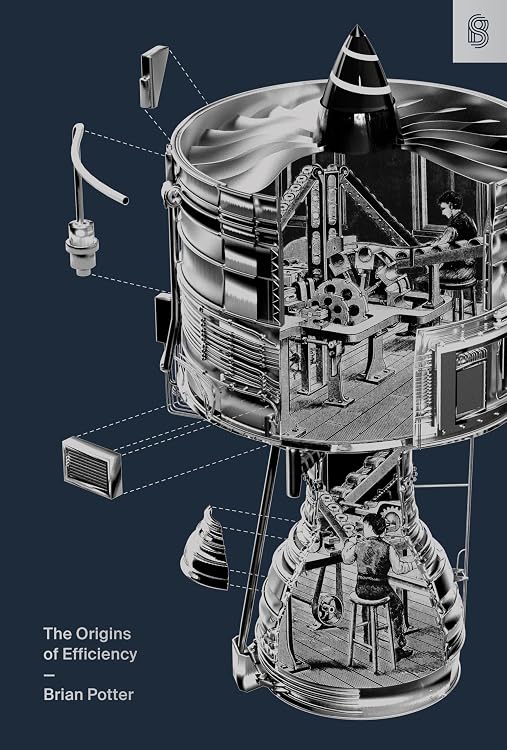
The Origins of Efficiency by Brian Potter
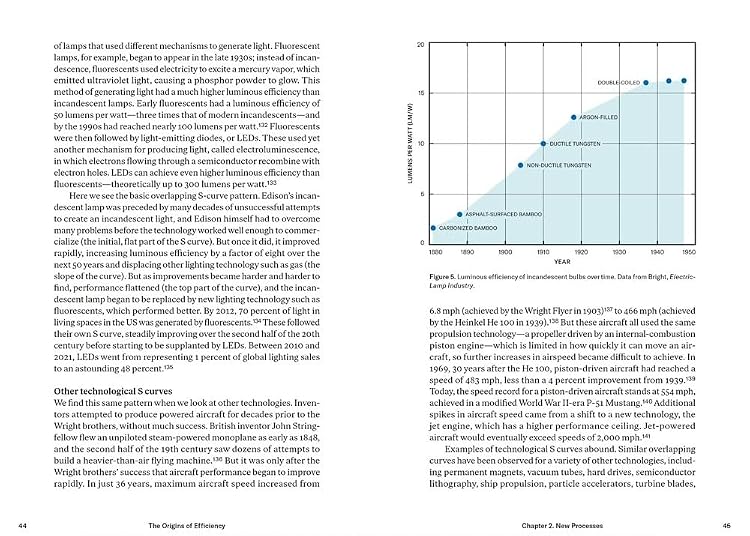
The Origins of Efficiency by Brian Potter explores how production processes become more efficient, using examples from penicillin, steel, semiconductors, light bulbs and automobile manufacturing. It connects these histories to areas such as housing, medicine and education where the book says further cost reductions remain possible.
At a glance
- Explains production efficiency through historical and industrial examples.
- Covers penicillin, incandescent light bulbs and carmakers including Ford, Toyota and Tesla.
- Looks at production costs in sectors where the book argues further efficiency gains are needed.
Reference price: $59.50
Price checked: Nov 20, 2026
View offerBlack Friday weekExplore the selectionOften bought together

Pros and cons
Pros
- The examples span multiple industries, linking manufacturing methods with wider economic and historical change.
- The publisher description offers both detailed process discussion and broader context on progress.
Technical specifications
8 specifications| Language | English |
|---|---|
| Print length | 384 pages |
| Publication date | Oct. 14 2025 |
| Publisher | Ingram Publisher Services |
| ISBN-10 | 1953953522 |
| ISBN-13 | 978-1953953520 |
| Weight listed | 684 g |
|---|---|
| Dimensions | 15.88 x 5.08 x 23.5 cm |
Who is it for?
A good fit for
- Readers interested in manufacturing, production systems and industrial history.
- People exploring how production costs change and what may help reduce them in housing, medicine or education.
Less suited to
- Readers seeking a hands-on manufacturing manual or a narrowly focused guide to one industry.
Customer reviews on Amazon
- 5 stars
71% 71% - 4 stars
19% 19% - 3 stars
10% 10% - 2 stars
0% 0% - 1 star
0% 0%
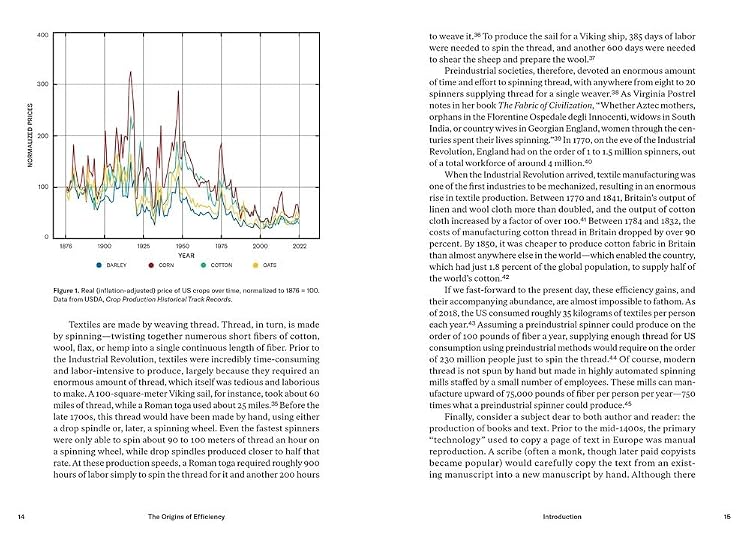
Customer feedback describes the book as informative and says it illuminates basic principles. The overall rating distribution is largely positive, with some mid-range ratings, but ratings alone do not explain individual reactions. For readers interested in how manufacturing processes develop, the reported focus on clear principles may be relevant alongside the book's detailed industrial examples.
Positive themes
- Customers describe the content as informative and say it illuminates basic principles.
Frequently asked questions
What does The Origins of Efficiency cover?
It examines how production processes become less time- and resource-intensive, using examples including penicillin, light bulbs and automobile manufacturing.
Does the book focus only on factories?
The description discusses production methods across industries and also considers areas such as housing, medicine and education.
How long is the book?
The listed print length is 384 pages.
Alternative options
All About Manufacturing Fundamentals: A Comprehensive Guide to Manufacturing, from Shaping to Forming, Cutting, and Joining, including Shop Floor Etiquette, Product Development, and Quality Control
$110.13
LLM Engineer's Handbook: Master the art of engineering large language models from concept to production
$75.99

Quantum Physics for Beginners: From Wave Theory to Quantum Computing. Understanding How Everything Works by a Simplified Explanation of Quantum Physics and Mechanics Principles
$21.99
P3 Selling: The Essentials of B2B Sales Success
$6.99

AI and the Octopus Organization: Building the Superintelligent Firm
$27.55
How to Control the Game: Timeless Tactics of Power and Strategy
$23.99

Webb's Cosmos: Images and Discoveries from the James Webb Space Telescope
$48.72
P3 Selling: The Essentials of B2B Sales Success
$19.50
All About Manufacturing Fundamentals: A Comprehensive Guide to Manufacturing, from Shaping to Forming, Cutting, and Joining, including Shop Floor Etiquette, Product Development, and Quality Control
$164.76
It's Not About the Mangos: Organizational Success Means Putting People First
$6.76